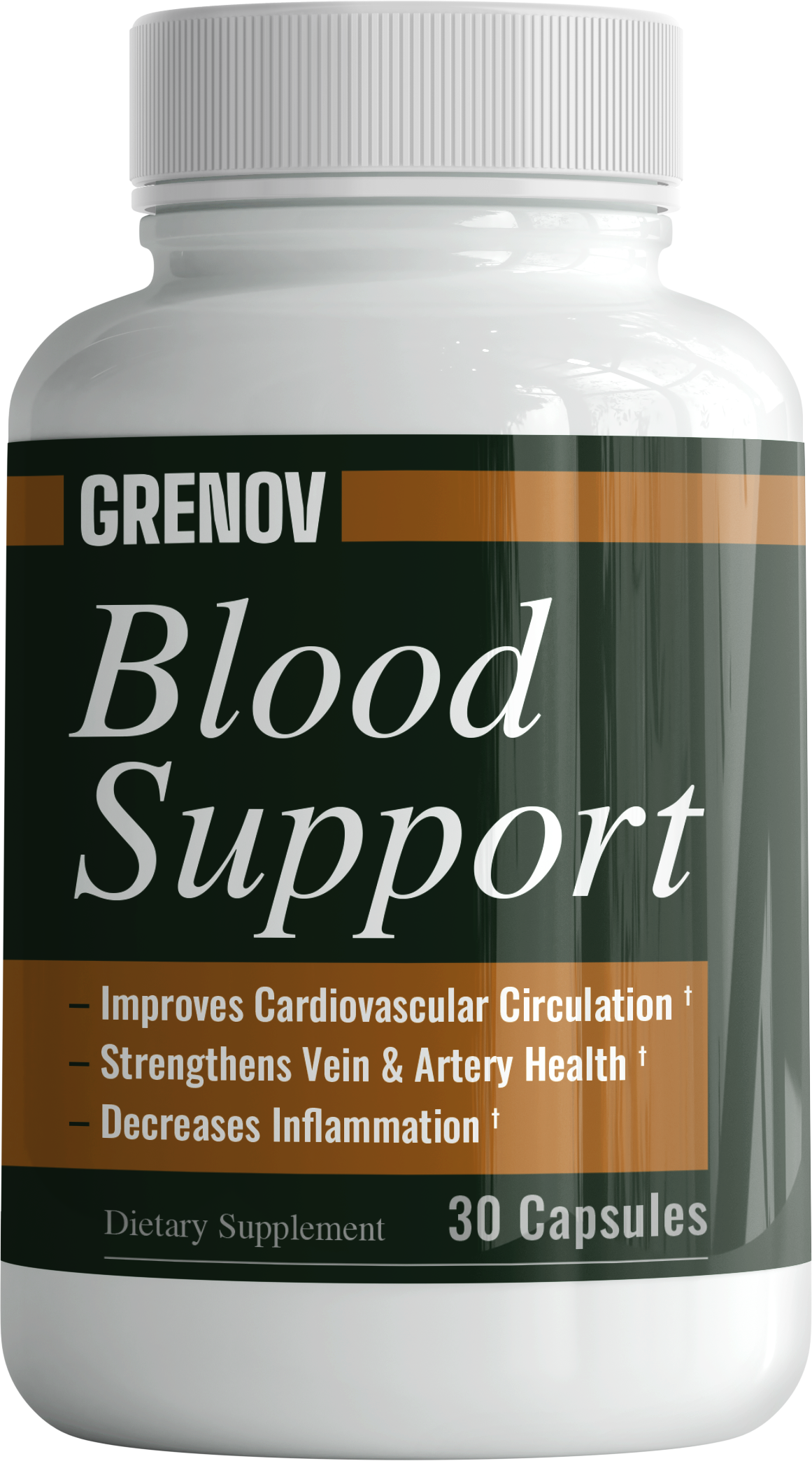
Blood Support Formula · 30 Capsules · 30-day supply
The blood glucose formula that explains itself.
Most supplements hide their active doses inside proprietary blends. Grenov doesn't. Six botanicals and trace minerals — each one listed by name, dosed by amount, and backed by the research that justifies its place in the formula. Built for people who want to understand exactly what they're taking.
Scroll down and we'll walk you through every compound — the origin, the mechanism, the dosage rationale, and the research behind it. If the evidence convinces you, the formula is ready. If it doesn't, you'll know exactly why.
Six botanicals and trace minerals selected for their studied effects on glucose metabolism, insulin sensitivity, and the enzymatic pathways that govern both.
Each compound in Grenov has a distinct mechanism of action. Together they address multiple points in a complex physiological process — without redundancy, without filler. This page documents what each one is, where it comes from, how it works, and what the research actually shows.
Origin & Traditional Use
The inner bark of Cinnamomum cassia or Cinnamomum verum — two closely related species collectively referred to as cinnamon — has been documented in Ayurvedic, Chinese, and Egyptian medical texts for thousands of years. Classical descriptions of its therapeutic applications centre on digestive complaints and what would now be recognised as symptoms of metabolic dysfunction: excessive thirst, fatigue after eating, and impaired wound healing. It is one of the most extensively used medicinal spices in recorded history.
Mechanism of Action
Cinnamon's active constituents — principally cinnamaldehyde and a class of polyphenols called proanthocyanidins — have been studied across several mechanisms relevant to blood glucose. Research suggests they may activate GLUT-4 glucose transport proteins, which facilitate cellular uptake of glucose from the bloodstream. Additionally, certain cinnamon compounds appear to inhibit alpha-glucosidase activity — the same enzyme that white mulberry leaf acts on — meaning cinnamon potentially operates both at the cellular uptake level and upstream, slowing carbohydrate breakdown. Some studies also indicate effects on AMPK activation, overlapping with berberine's pathway.
Research & Dosage
Human clinical trials have studied cinnamon supplementation at doses ranging from 500mg to 6g of whole bark daily. The 70mg in Grenov represents a concentrated standardised extract — the active polyphenol content per unit of extract is significantly higher than in raw bark preparations, making direct dose comparisons to whole-bark trials misleading. A frequently cited 2003 randomised controlled trial published in Diabetes Care by Khan et al. examined cinnamon's effects on fasting blood glucose, triglycerides, and LDL cholesterol over 40 days. Subsequent systematic reviews have produced mixed results, a common finding in botanical research where preparation method and patient selection vary widely between studies.
Cinnamon's proposed AMPK-activating effect creates a complementary signal alongside Berberine HCL (Compound 05), which activates the same pathway through different molecular interactions. The two compounds address AMPK from distinct angles.
"If you're looking for the compound with the longest documented history of human use alongside the broadest set of studied mechanisms, cinnamon bark is it — though it's worth noting that preparation method and extract concentration matter considerably in how the research translates to supplementation."
Mulberry leaf addresses glucose before it enters the bloodstream, by slowing carbohydrate breakdown. Bitter Melon Extract (Compound 04) acts downstream, addressing what happens once glucose is already in circulation. Together they cover sequential stages of the same pathway.
Origin & Traditional Use
Morus alba, the white mulberry, is native to northern China and spread along the Silk Road primarily as the preferred food source for silkworms — the foundation of the Chinese silk trade. The leaves have been used in Traditional Chinese Medicine for over 2,000 years. Classical Chinese texts reference their application for symptoms described in pre-modern terms as excessive thirst, frequent urination, and fatigue — a constellation of signs now associated with hyperglycaemia. The convergence of traditional observation with modern mechanistic research is unusually precise for a botanical compound.
Mechanism of Action
White mulberry leaf's most studied active compound is 1-deoxynojirimycin (DNJ), an iminosugar alkaloid that inhibits alpha-glucosidase — the intestinal enzyme responsible for breaking polysaccharides and disaccharides into monosaccharides (primarily glucose) for absorption. When alpha-glucosidase activity is reduced, the rate at which dietary carbohydrates are converted into blood glucose is slowed, resulting in a flatter postprandial (after-meal) glucose curve. This is the same mechanism targeted by the pharmaceutical alpha-glucosidase inhibitor acarbose (Glucobay), one of the most prescribed blood glucose medications in the world.
Research & Dosage
Clinical research on mulberry leaf extract has focused particularly on postprandial glucose response — measuring blood glucose at 30, 60, and 120 minutes after a carbohydrate load. The 60-minute timepoint is where the most consistent differences between treated and control groups tend to appear. Studies examining the timing of intake consistently suggest mulberry leaf extract is most relevant when taken with or shortly before a meal containing carbohydrates, as its mechanism is substrate-dependent. The standardised extract form used in Grenov concentrates the DNJ content from whole leaf preparations.
"White mulberry leaf is timing-sensitive in a way the other compounds in this formula are not. Its alpha-glucosidase inhibition mechanism is most active when carbohydrates are present — which is why consistent daily use with your main meal matters more than irregular dosing."
"I've been monitoring my blood sugar for five years. After three months with Grenov, my readings are more consistent — the spikes I used to get after dinner have settled considerably. I feel genuinely more in control of what's happening in my body, and I appreciated being able to read exactly what's in the formula before buying."
Origin & Traditional Use
Juniperus communis — common juniper — produces small blue-black berries that have been used across Nordic, Mediterranean, Central Asian, and Native American herbal traditions for centuries. In European folk medicine, juniper was applied primarily to inflammatory conditions, joint complaints, and digestive disorders. Its aromatic essential oils and bitter compounds made it a standard component of aperitifs and digestive preparations, and in Scandinavian traditions it was associated with purification and circulatory support. The documented use predates modern understanding of its active compounds by several hundred years.
Mechanism of Action
Juniper berries contain several classes of bioactive compounds studied for their antioxidant and anti-inflammatory effects: flavonoids including quercetin and kaempferol, terpenoids, and essential oils including alpha-pinene and sabinene. The relevance to glucose metabolism is indirect but meaningful. Oxidative stress is closely associated with insulin resistance — elevated reactive oxygen species impair insulin receptor signalling and reduce cellular glucose uptake efficiency. By reducing the oxidative load in the metabolic environment, juniper berry extract supports the conditions in which the other compounds in this formula operate. Quercetin, in particular, has been studied for direct effects on GLUT-4 expression in adipose tissue.
Research & Dosage
Juniper berry extract occupies a different place in the evidence hierarchy compared to berberine or chromium. Large-scale human trials are limited; the existing research base draws primarily from in vitro studies, animal models, and observational data on broader flavonoid intake. This is worth stating clearly: the mechanistic plausibility is strong and the antioxidant activity is well-documented, but the direct human clinical trial evidence for blood glucose effects is less robust than the formula's other compounds. It earns its place in Grenov through a complementary rather than primary role.
Juniper berry's antioxidant activity addresses the oxidative environment in which all metabolic processes occur. Oxidative stress impairs the very insulin receptor signalling that Chromium Picolinate (Compound 06) is working to amplify — clearing that interference creates better conditions for the whole formula.
"Juniper berry is the compound that doesn't show up directly on a glucose meter — but removing oxidative interference from an already-active metabolic process is not a trivial contribution, particularly given the well-established link between chronic oxidative stress and insulin resistance."
Three more to go — Bitter Melon, Berberine HCL, and Chromium Picolinate. The rest of the formula does its work after glucose has already entered circulation. Keep reading.
See pricing →Bitter melon and Berberine HCL (Compound 05) both activate AMPK — operating through different molecular interactions at the same energy-sensing pathway. This kind of mechanistic redundancy is generally considered preferable to single-mechanism approaches in complex metabolic conditions.
Origin & Traditional Use
Momordica charantia — the bitter melon — is consumed as both food and medicine across South Asia, Southeast Asia, East Africa, and Central and South America. It holds a position in traditional medicine systems on four continents that developed in relative isolation from each other. The independent convergence of Ayurvedic medicine, Traditional Chinese Medicine, West African herbalism, and pre-Columbian South American medicine on this specific fruit, for this specific application, represents a form of empirical evidence that doesn't fit neatly into clinical trial methodology but is difficult to dismiss. It is arguably the most widely used botanical for blood glucose support in documented human history.
Mechanism of Action
Bitter melon extract is unusual in containing three structurally distinct classes of active compounds, each studied through different mechanisms. Charantin, a steroidal glycoside, has demonstrated glucose-lowering activity in animal studies. Polypeptide-p is a plant-derived peptide with structural similarities to insulin that may activate insulin receptors directly. Vicine and other alkaloids have been studied for AMPK activation — the same energy-sensing enzyme pathway that berberine acts on. Having three separate active constituent groups addressing partially overlapping mechanisms makes bitter melon extract robustly represented in the formula even at conservative doses.
Research & Dosage
The human clinical evidence for bitter melon presents a characteristically mixed picture. Several small randomised controlled trials in individuals with type 2 diabetes have shown effects on fasting glucose and HbA1c over 12-week periods; a 2011 RCT published in Nutrition Journal by Fuangchan et al. found no significant difference versus placebo at standard doses, while other smaller trials have reported positive effects. The inconsistency likely reflects differences in extract standardisation across studies — bitter melon's active compound content varies considerably depending on plant maturity, part used (pulp vs. seed vs. whole fruit), and extraction method. The mechanistic evidence is more consistent than the clinical trial record.
"The fact that independent traditional medicine systems across four continents converged specifically on bitter melon, specifically for metabolic support, is one of those data points that doesn't fit a clinical trial framework but is hard to set aside when evaluating a formula ingredient."
"Started on my doctor's recommendation. Two months in, my levels are steadier — particularly after bigger meals. What I most appreciated was that the ingredient list is fully transparent. I could look up each compound myself before committing, and what I found gave me real confidence in the formula."
Origin & Traditional Use
Berberine is an isoquinoline alkaloid — a bright yellow crystalline compound — found in the root, rhizome, and stem bark of several plants including Berberis vulgaris (European barberry), Hydrastis canadensis (goldenseal), and Coptis chinensis (goldenthread). It has been documented in Chinese medical texts for over 3,000 years. In both Traditional Chinese Medicine and Ayurveda, berberine-containing plants were used for gastrointestinal complaints and infections — the antimicrobial properties of berberine have been extensively documented. The metabolic applications that now drive research interest were a secondary observation that gained serious scientific attention after a landmark 2008 clinical study.
Mechanism of Action
Berberine's primary studied mechanism is AMPK activation. AMPK — AMP-activated protein kinase — is sometimes described as the body's master metabolic regulator: an enzyme that functions as an energy sensor, activating when cellular energy levels are low and driving a cascade of metabolic adjustments. When AMPK is activated, it promotes glucose uptake in muscle tissue by driving GLUT-4 expression to the cell surface, inhibits hepatic gluconeogenesis (the liver's production of new glucose from non-carbohydrate sources), and improves insulin sensitivity at the receptor level. This is the same downstream pathway targeted by metformin, the most widely prescribed pharmaceutical for type 2 diabetes management. Berberine reaches AMPK through a distinct molecular route — it is not simply a botanical version of metformin, but it shares the downstream metabolic consequence.
Research & Dosage
The evidence base behind berberine is unusually robust for a supplement ingredient. The most frequently cited study is a 2008 randomised controlled trial published in Metabolism by Zhang et al., which compared berberine to metformin directly in individuals with type 2 diabetes. Both groups received 500mg three times daily. At 12 weeks, berberine produced comparable reductions in HbA1c (from 9.5% to 7.5%), fasting blood glucose (from 10.6 to 6.9 mmol/L), and postprandial glucose. A subsequent meta-analysis published in Evidence-Based Complementary and Alternative Medicine reviewed 14 randomised controlled trials and concluded berberine had a significant beneficial effect on fasting blood glucose and HbA1c. A 2014 meta-analysis in Diabetes, Metabolic Syndrome and Obesity drew similar conclusions across a wider trial pool.
A Note on the HCL Form
Berberine HCL is the hydrochloride salt form of berberine, developed to address the notably poor oral bioavailability of standard berberine. Comparative absorption studies show meaningfully higher plasma berberine levels with the HCL salt versus standard berberine chloride or sulphate. Many of the clinical trials demonstrating the strongest effects used the HCL form specifically, and studies citing 500mg+ doses used lower-bioavailability preparations. The 25mg in Grenov reflects a concentrated HCL form — direct dose comparison to whole-form berberine studies should account for this difference.
Berberine functions as the central mechanism compound in this formula. Cinnamon bark and bitter melon activate overlapping AMPK pathways; mulberry leaf acts upstream; chromium amplifies insulin receptor efficiency downstream. Berberine is the axis around which the formula is structured.
"The research behind berberine HCL is unusually rigorous for a supplement ingredient. A head-to-head comparison with metformin in a randomised controlled trial — producing comparable HbA1c effects — is the kind of data most botanical ingredients simply don't have. That doesn't make it a pharmaceutical substitute, but it does make it the most evidence-anchored component in this formula."
Chromium acts at the insulin receptor level — amplifying the sensitivity of insulin signalling that the rest of the formula is working to support. It is the last functional link in the chain: upstream compounds slow glucose entry, middle compounds activate cellular uptake, chromium ensures the receptor signalling pathway is operating at full efficiency.
Origin & Background
Chromium is an essential trace mineral — required by the body in small quantities for normal metabolic function, but not synthesised endogenously. Dietary sources include whole grains, meat, broccoli, and certain nuts and seeds. A significant concern in modern diets is that food processing removes much of the naturally occurring chromium present in whole foods. The picolinate form — chromium bound to picolinic acid — was developed by Gary Evans at the USDA Human Nutrition Research Center in the 1980s specifically to improve absorption compared to other chromium forms, particularly chromium chloride, which has demonstrably poor bioavailability.
Mechanism of Action
Chromium's primary studied function is the potentiation of insulin receptor signalling. The proposed mechanism involves chromodulin — also called low-molecular-weight chromium-binding substance (LMW-Cr) — a small oligopeptide that activates the insulin receptor's tyrosine kinase activity when chromium is present. In functional terms: insulin binds to its receptor, and chromium facilitates the downstream signalling cascade that follows, improving the efficiency with which that insulin signal translates into cellular glucose uptake. Without adequate chromium, insulin receptors respond less efficiently to insulin — a state of functional insulin resistance that is distinct from the molecular insulin resistance studied in type 2 diabetes, but similarly impairs glucose clearance.
Research, Dosage & Regulatory Status
Chromium picolinate holds one of the strongest regulatory approval profiles of any compound in Grenov. The European Food Safety Authority (EFSA) has approved a qualified health claim stating that chromium "contributes to normal macronutrient metabolism" and "contributes to the maintenance of normal blood glucose concentrations" — among the most specific blood glucose claims permitted under EU regulation for any supplement ingredient. The US FDA similarly approved a qualified health claim for chromium picolinate relating to insulin resistance and type 2 diabetes risk, with the qualifier that the evidence is "limited and not conclusive." A 2014 systematic review in Diabetes Technology & Therapeutics examining 22 randomised trials found significant improvements in both fasting blood glucose and HbA1c with chromium supplementation. At 200mcg, Grenov delivers chromium at the upper boundary of the dose range studied in the strongest trials.
"At 200mcg, Grenov delivers chromium picolinate at the upper end of the clinically studied dosage range. The form specifically matters — chromium chloride, the cheapest form found in many low-cost supplements, has substantially lower bioavailability than the picolinate salt used here."
Six compounds. Six distinct mechanisms. No proprietary blends, no hidden doses. If the research convinced you, the formula is ready.
Each compound addresses a distinct stage of glucose metabolism. The formula is designed without redundant mechanisms — every compound earns its place through a role that the others do not replicate. Serving size is 2 capsules daily; other ingredients: Gelatin, Brown Rice Flour, Silicon Dioxide. Made in the USA.
These statements have not been evaluated by the Food and Drug Administration. This product is not intended to diagnose, treat, cure, or prevent any disease. Clinical findings referenced above relate to the individual compounds as studied in their respective trials and do not represent claims for this product specifically.
2 capsules daily · Take with your largest meal · 30-day supply per bottle
Alpha-glucosidase inhibition from mulberry leaf and bitter melon can occasionally cause mild gastrointestinal sensitivity as the digestive enzyme environment adjusts. Taking with food minimises this. The effect typically resolves within the first two weeks. Berberine's AMPK activation begins operating immediately but accumulates over time — early effects are subtle.
The window in which alpha-glucosidase inhibition and initial AMPK effects are most studied. Users often report steadier postprandial energy — less pronounced fatigue after meals — within 3–4 weeks. Fasting glucose readings, if you're monitoring, may begin reflecting more consistent numbers. The berberine effect compounds with continued use.
Glycated haemoglobin (HbA1c) reflects average blood glucose across approximately 90 days — which is why virtually all clinical trials involving berberine, bitter melon, and related compounds run 12 weeks. Month three is the meaningful measurement checkpoint. If you are monitoring HbA1c with your doctor, this is the timeframe that clinical research suggests is relevant.
Grenov is designed to support healthy glucose metabolism in adults managing blood sugar through diet, lifestyle, and supplementation. It is not a pharmaceutical and is not a substitute for medical care. If you are taking medication for blood glucose management, speak with your doctor before adding any supplement.
"I've been monitoring my blood sugar for five years. After three months with Grenov, my readings are more consistent — the spikes I used to get after dinner have settled considerably. I feel genuinely more in control of what's happening in my body."
"Started on my doctor's recommendation. Two months in, my levels are steadier — particularly after bigger meals. I appreciate that the ingredient list is transparent and nothing is hidden behind a proprietary blend."
"My nutritionist suggested I try berberine, and when I researched Grenov I saw it was included alongside compounds I'd seen in other research I'd been reading. Four months in, my GP noted my most recent bloodwork looked better than it has in years. I plan to continue."


Secure checkout · 30-day return policy on unopened bottles · Made in the USA